

The Rise of Co-Buying: Why More First Home Buyers Are Purchasing Property Together
Buying your first home alone is becoming less common.
New CommBank data released on 12 March shows that 6 in 10 first home buyers are now co-buying with someone else. Instead of purchasing property individually, buyers are increasingly teaming up with friends, siblings or family members to enter the market.
It’s a shift that reflects both the reality of property prices and a growing willingness among buyers to explore more collaborative ways of achieving home ownership.
Why Co-Buying Is Increasing
For many buyers today, the challenge isn’t necessarily income. The real hurdle is often deposit size and borrowing capacity.
Property prices, especially in major cities, mean that many buyers are looking for ways to strengthen their financial position when applying for a home loan.
By buying together, co-buyers can combine:
- Deposits
- Incomes
- Borrowing capacity
This can significantly improve the ability to purchase a property sooner, rather than waiting years to save a larger deposit or increase income.
For some buyers, it’s the difference between entering the market now or remaining on the sidelines.
A Shift Toward Collaborative Ownership
Traditionally, home ownership has been seen as a solo or couple-based decision. However, the increasing prevalence of co-buying suggests a broader shift toward collaborative property ownership.
We’re now seeing arrangements where:
- Siblings buy their first home together
- Friends combine resources to purchase an investment or live-in property
- Parents partner with children to help them enter the market
In many ways, it’s a practical response to affordability challenges and reflects how buyers are becoming more strategic about entering the property market.
The Important Part: Structure Matters
While co-buying can be an effective strategy, the structure of the arrangement is critical.
Before purchasing together, it’s important to consider:
1- Ownership structure
How the property ownership is divided between buyers.
2- Exit strategy
What happens if one person wants to sell, move out or buy their own property later.
3- Loan structure
How the loan is set up and how repayments are shared.
4- Legal agreements
Clear agreements that outline responsibilities and future scenarios.
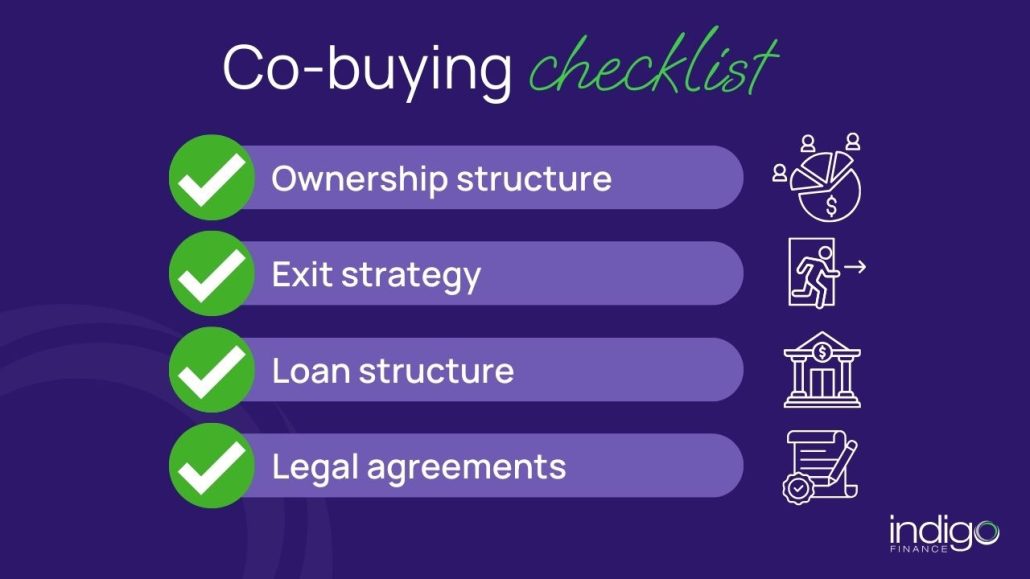
These considerations help ensure the arrangement works smoothly both now and in the future.
A Strategy Worth Exploring
Co-buying isn’t the right approach for everyone. But for many first home buyers, it’s becoming one of the most practical ways to enter the property market sooner.
As property markets evolve, the strategies buyers use to achieve home ownership are evolving too.
The key is understanding how to structure the arrangement properly from the beginning.


