What’s the Best Auction Strategy?
Property auctions in Australia are iconic. They can be fast, intense, and emotionally charged, and while they offer opportunities, they can also cost buyers dearly if approached without a plan. So what’s the best auction strategy for you if you find yourself in the heat of battle?
Whether you’re a first-home buyer, investor or experienced purchaser, having a smart auction strategy can be the difference between securing a property at a fair price and overpaying under pressure.
Why Auction Strategy Matters
Unlike private treaty sales, auctions expose buyers to psychological pressure and competitive bidding in real time. Auctioneers and agents design the process to generate urgency and drive prices up (not necessarily to help you get the best deal). Understanding how auctions work and planning your moves in advance can protect your budget and improve your chances of success.
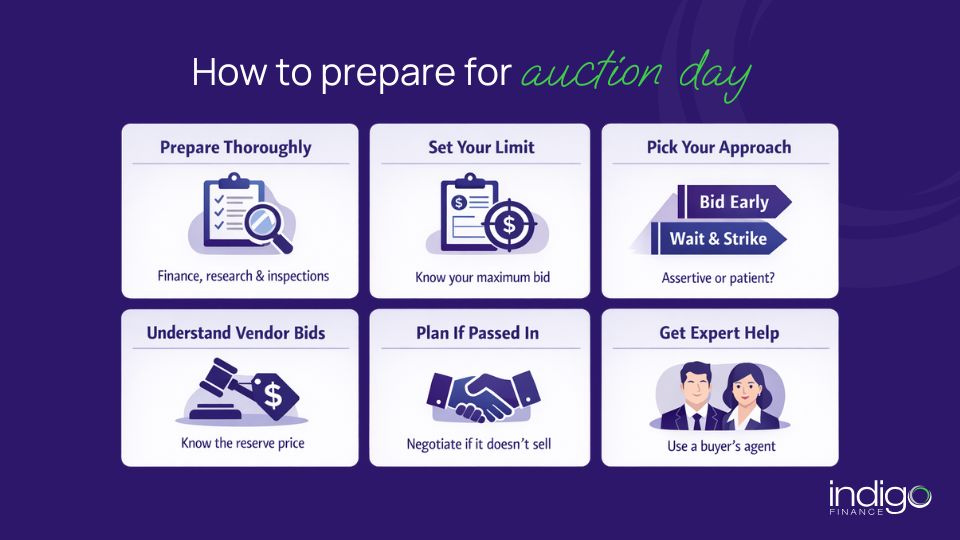
1. Prepare Meticulously Before is the Best Auction Strategy
Preparation is the foundation of any solid auction strategy.
Get your finance sorted: Have pre-approval or unconditional finance in place well before the auction date. Without this, you risk winning but being unable to settle, which can lead to legal or financial penalties.
Do your homework: Research recent sales in the suburb and compare similar properties. Understand what a realistic price range looks like based on current market data. This gives you confidence and helps set accurate limits.
Complete inspections and due diligence: Building inspections, pest reports and valuations should be done before auction day. Entering an auction blind on these fronts is a quick way to regret your decision later.
Know the auction rules for your state: Auction procedures vary across NSW, Victoria, QLD and other states. Knowing how vendor bids, reserves and pass-in negotiations work helps avoid confusion and traps on the day.
2. Set Clear Limits (and Stick to Them)
One of the most common and costly mistakes buyers make is letting emotion overrule logic during bidding. Auctions are designed to be emotional settings, but your strategy should be logical.
Determine a maximum bid based on what you can realistically afford and what the property is worth. Write it down, and don’t deviate from it. This prevents “auction fever” from pushing you into spending more than you planned.
Consider budgeting with a safety buffer: Buyers often forget that paying even a little more can increase stamp duty, affect mortgage insurance requirements and add ongoing costs over decades. Knowing your limits in dollar terms helps keep long-term costs manageable.
3. Choose Your Bidding Strategy
There are two broad approaches you can consider on auction day, and the best one depends on the local market and your comfort level.
Option A: Is “Assertive, Early Bidding” the Best Auction Strategy?
Some experienced buyers choose to take control early:
- Open confidently near your valuation limit
- This can deter other bidders and set a strong tone
- Bid fast and decisively
- Quick, assertive bids can undermine competitors’ confidence and discourage them from staying in the race
- Stay calm and composed
- Showing nervousness or hesitation can encourage others to stay in the contest
This strategy suits markets where bidding tends to be reactive and emotional. It signals strength and can shorten the auction quickly.
Option B: Is “Wait and Strike” the Best Auction Strategy?
An alternative tactic is to watch and wait:
- Observe the early flow of bidding before you jump in
- Come in strongly once competition thins
- This can psych out other bidders who think the action is over
This strategy works well when buyer numbers are low or when there’s a clear phase where bidding stalls before final attempts.
4. Understand Vendor Bids and the Reserve Price
In Australia, vendors can place bids up to the reserve price, known as a vendor bid. It’s legal and common, and can sometimes make it look like the market is more competitive than it really is.
Vendor bids do not count as genuine competing bids from other buyers, and they can be rescinded.
Similarly, a “reserve reveal” (where the agent shows the reserve to bidders) doesn’t mean that price must be paid. If the auction doesn’t reach reserve, the property is typically passed in and becomes a negotiation between the highest bidder and the seller.
Knowing this removes some of the pressure and helps you assess when the agent is shaping the perception of competition rather than real demand.
5. Have a Plan if the Property Passes In
If bidding stalls before reserve is met, the property passes in, but that’s not the end. At this point, it’s now effectively a negotiation under auction conditions.
In this situation:
- Stay calm and don’t rush into “panic bids”
- Try to negotiate terms with the agent, knowing that they still have obligations to the seller
- Understand that sometimes walking away is a better move than paying more than your valuation
Remember, a vendor is more often than not keen to sell, just as much as the buyer is keen to buy. Agents might talk tough, but does the seller really want to walk away and put the property back on the market?
6. Consider Professional Help
For many buyers (especially first-timers) having a trusted representative can make all the difference. A property professional (buyer’s agent) can bid on your behalf without the emotional attachment that clouds most buyers at auctions.
They can also:
- Intervene in post-auction negotiations
- Spot pitfalls you might miss
- Keep your strategy disciplined under pressure
Think of it as using expertise to enhance your auction strategy, not delegating responsibility, or showing weakness.
What’s the Best Auction Strategy for You?
Sorry, but there’s no one-size-fits-all auction strategy, but there is a framework that works.
Approach auction day with thorough preparation, clear limits, a tactical bidding approach tailored to your market, and an understanding of auction psychology and mechanics. That’s the best auction strategy for you.
Whether you enter the ring yourself or enlist professional support, going to auction without a plan is like stepping into the ring blindfolded.
With the best auction strategy for you built on logic rather than emotion, you’re far more likely to walk away with a fair price and a sense of confidence, not regret.
As always, the most important step is your first step. Reach out and let’s get your finance sorted first, so you know where you can start looking.